
CARTrivia
A playful checkout intervention that uses memory-based interaction to reduce impulse buying, prompting users to recall items in their cart before purchase to encourage more intentional, reflective decision-making.
Team
Julya Lima
Timeline
April 2025
Tools Used
Claude AI (Working prototype), Figma

The Problem
My Solution
Online shopping environments are designed for speed and convenience, often encouraging impulse purchases driven by persuasive design, emotional triggers, and passive browsing. This leads to unnecessary spending, high return rates, and increased environmental impact.
CARTrivia introduces friction at checkout by turning the cart into a short memory-based challenge. Before completing a purchase, users must identify the items they added, prompting reflection on what they actually remember and value. The concept is inspired by Chindōgu principles (designing slightly absurd but thought-provoking solutions that challenge everyday behaviors) using playfulness to disrupt impulse buying without restricting the user.

Persona
Emily Jackson
Age: 29
Occupation: Social Media Manager
-
Frequently shops online on her phone during downtime
Quick to engage with trends and product recommendations (especially TikTok)
Drawn to visually appealing or clever UI experiences
Often makes quick, impulse purchases
-
Wants to feel more intentional about her spending
Reduce impulse purchases without feeling restricted
Open to playful, non-intrusive design interventions
Prefers engaging experiences over strict limitations
-
Regret after making impulsive purchases
Overconsumption and unnecessary spending
Feels environmental guilt from excessive buying
Interaction Flow Chart
〰️
Interaction Flow Chart 〰️

Figma Prototype
〰️
Figma Prototype 〰️
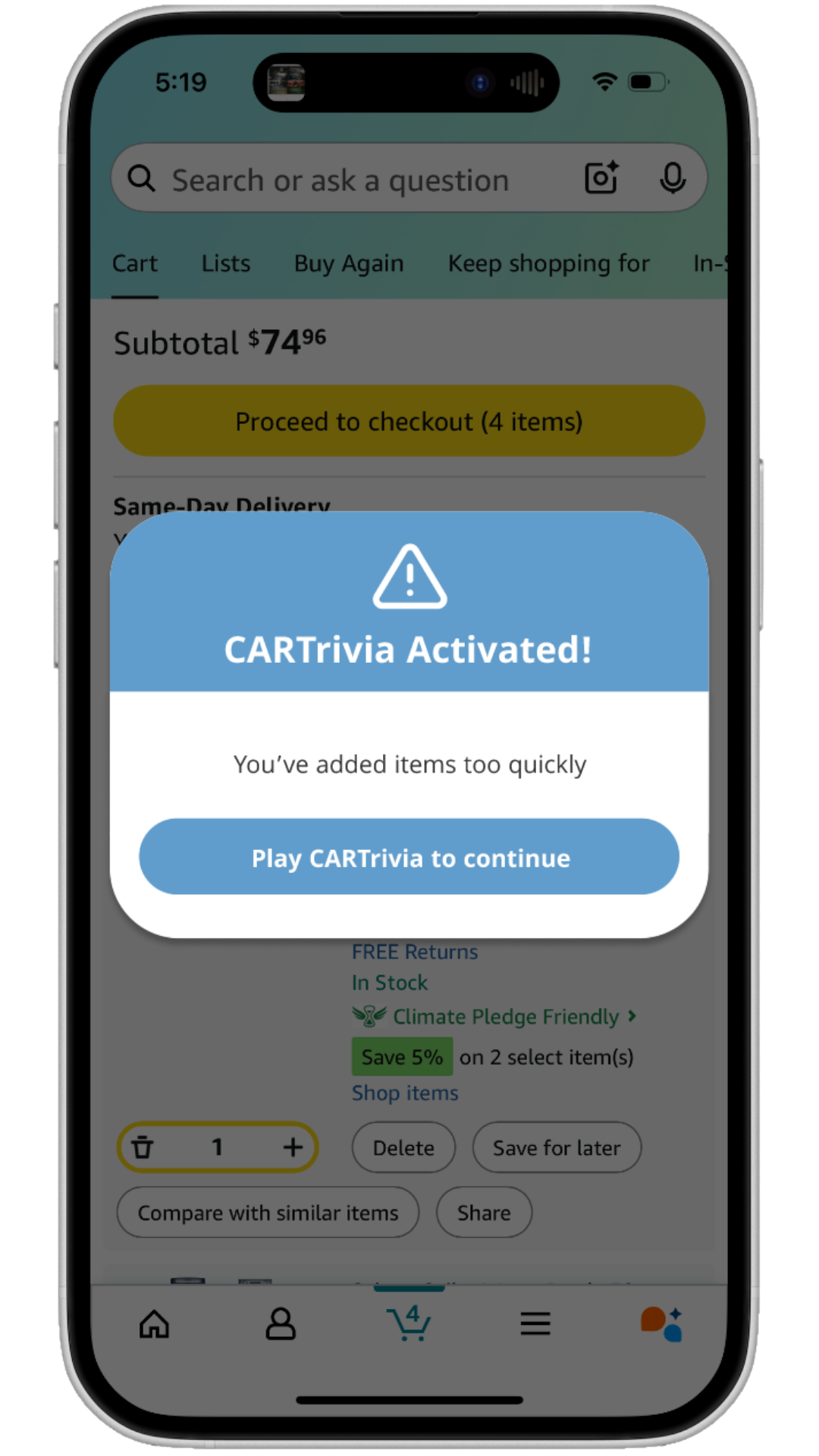
When users rapidly add items and head to checkout, CARTrivia steps in to disrupt the impulse buying flow.
For each item added, CARTrivia presents a look-alike product, and the user has three seconds to identify the correct one from their cart.
If the user correctly identifies their item, it stays in the cart and remains available for purchase.
If the user selects incorrectly, it shows they didn’t take enough time to look and think about the item, indicating impulse shopping behavior.
Incorrectly chosen items are placed in a “cool-down cart,” where they can only be purchased after two hours, giving users time to reflect.